Bártfai gyűjtemény
A gyűjtemény létrejötte az 1500-as évek közepétől a 17. század végéig tartó időszakra, Bártfa virágkorára tehető. A város gazdasági helyzete igen kedvező volt, mivel a Keleti-tengert a Fekete-tengerrel összekötő kereskedelmi útvonal mentén feküdt. A polgárok az evangélikus hitet követték, és gyakran tanultak német egyetemeken, leginkább Wittenbergben. A kulturális fellendülés kulcsszemélyisége a város szülötte, Leonart Stöckel (1510–1560) volt, aki wittenbergi tanulmányai során személyes kapcsolatba került Martin Lutherrel (1483–1546), valamint Philipp Melanchthonnal (1497–1560) – ezek a kapcsolatok hazatérése után sem szakadtak meg. 1539-ben átvette szülővárosa iskolájának vezetését, s működése nem csupán a színvonalas oktatást biztosította, hanem közvetlen hatással volt a Szent Egyed templom európai szintű zenei gyakorlatára is. Feltételezhető, hogy a zenei gyűjtemény legrégebbi kötetei még Stöckel idején kerültek Bártfára. A nyomtatványok egy részét valószínűleg a Wittenbergben tanuló diákok hozhatták magukkal, ezt a wittenbergi nyomtatványok nagy száma, valamint az egyik ilyen kötetben található bejegyzés is alátámasztja.
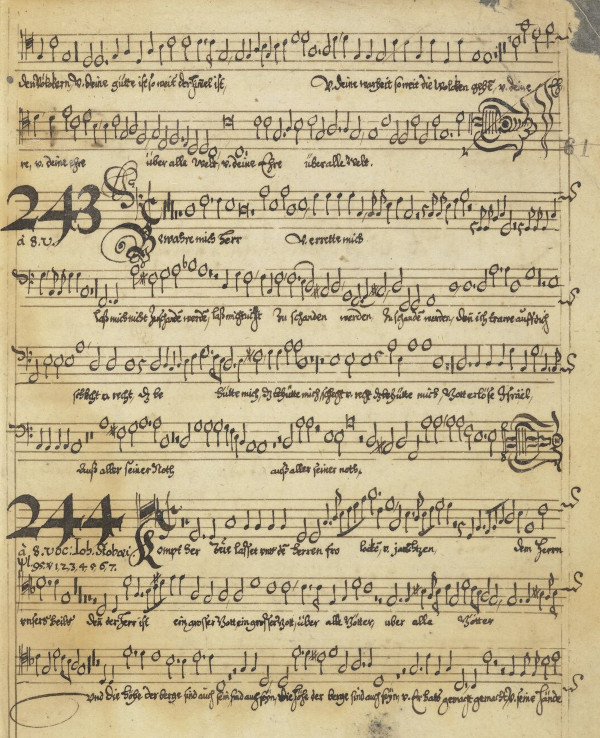
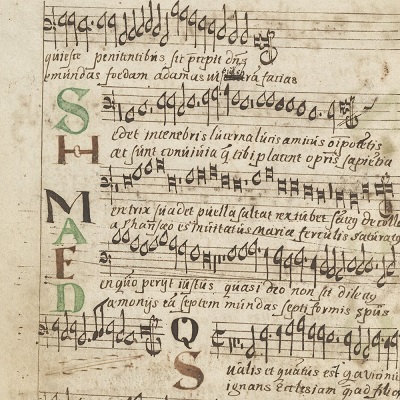
A Bártfai gyűjtemény 33 kéziratos (jelzetek: Ms. mus. Bártfa 1–13, 15–34, a 14-es jelzet nem létezik) és 20 nyomtatott (Mus. pr. Bártfa 1–20.) egységből áll, ezek közül a legmagasabb jelzettel rendelkező kéziratok töredékes műveket is tartalmaznak. A legrégibb kéziratok egy részét Wittenbergben, illetve Wittenberg környékén jegyezték le. Ezekben viszonylag kevés a németalföldi kompozíció, ám annál több az itáliai – például Giovanni Croce, Andrea és Giovanni Gabrieli, Luca Marenzio –, és német – Jacob Gallus-Handl, Hans Leo Hassler, Valentin Hausmann, Orlandus Lassus, Hieronymus és Michael Praetorius, Melchior Vulpius – szerzők műve. Előfordul, hogy a szólamokat egy kötetbe kötötték, valamint köteten belüli kolligátumok is találhatóak négy jelzet esetében.
A gyűjteménybe került 57 nyomtatvány elsősorban német területről származik (Wittenberg: Rhau officiumok; Nürnberg: Thesaurus musicus-sorozat; Drezda, Hamburg, Magdeburg, Jéna, Lipcse, Boroszló, Stettin), de van közöttük egy-egy löweni, antwerpeni, prágai és bécsi (Rauch: Currus triumphalis), többnyire ünnepkörök vagy liturgikus műfaj (responzóriumok, himnuszok, magnificatok, misék) szerint összeállított sorozat is. Egyes művek – például Hieronymus Praetorius motettái – nyomtatásban és kéziratos másolatban, vagy pedig szólamkönyvben és tabulatúrában is fennmaradtak. A nyomtatványok között egyetlen unikum Rodestoggius Bicinia Sacra című kiadványa (Nürnberg 1551; Mus. pr. Bártfa 12). A nyomtatványoknál is jelentősebbek a kéziratos kötetek és a nyomtatványok kéziratos kiegészítései, függelékei, amelyekben másutt nem található művek is olvashatók, sokszor csak töredékesen. Mivel gyakran több nyomtatványt is egybekötöttek, a korabeli gyakorlatnak megfelelően a nyomtatott kötetek üres lapjaira is másoltak műveket, illetve azokat sokszor eleve ebből a célból kötötték be.
The creation of the collection can be dated to the period from the mid-sixteenth century to the end of the seventeenth century, corresponding to the golden age of Bártfa. The city’s economic situation was highly favorable, as it was situated along the trade route connecting the Baltic Sea with the Black Sea. The citizens adhered to the Lutheran faith and frequently pursued studies at German universities, most notably in Wittenberg. A key figure in the city’s cultural flourishing was the native-born Leonart Stöckel (1510–1560), who during his studies in Wittenberg established personal contact with Martin Luther (1483–1546) as well as Philipp Melanchthon (1497–1560); these connections did not cease after his return home. In 1539, he assumed leadership of his hometown’s school, and his activity not only ensured high-quality education but also exerted a direct influence on the European-level musical practice of the Church of St. Aegidius. It may be assumed that the earliest volumes of the music collection reached Bártfa during Stöckel’s lifetime. Part of the printed material was likely brought back by students studying in Wittenberg, a hypothesis supported by the large number of Wittenberg imprints and by an inscription found in one such volume.
The Bártfa Collection consists of 33 manuscript units (shelfmarks: Ms. mus. Bártfa 1–13, 15–34; shelfmark no. 14 does not exist) and 20 printed units (Mus. pr. Bártfa 1–20). Among these, the manuscripts bearing the highest shelfmarks also contain fragmentary works. A portion of the earliest manuscripts was copied in Wittenberg or in its vicinity. These sources contain relatively few Netherlandish compositions, but considerably more works by Italian composers — such as Giovanni Croce, Andrea and Giovanni Gabrieli, Luca Marenzio — and by German composers — Jacob Gallus-Handl, Hans Leo Hassler, Valentin Hausmann, Orlandus Lassus, Hieronymus and Michael Praetorius, Melchior Vulpius. In some cases, the individual parts were bound together into a single volume, and in four instances, composite volumes (colligata) are also found within a single shelfmark.
The 57 printed items incorporated into the collection originate primarily from German-speaking territories (Wittenberg: Rhau’s Officia; Nuremberg: the Thesaurus musicus series; Dresden, Hamburg, Magdeburg, Jena, Leipzig, Breslau, Stettin), though the corpus also includes individual prints from Leuven, Antwerp, Prague, and Vienna (Rauch: Currus triumphalis), mostly arranged according to the liturgical year or by liturgical genre (Responsories, Hymns, Magnificats, Masses). Certain works — for example, the motets of Hieronymus Praetorius — have survived both in print and in manuscript copy, or alternatively in partbooks and in tablature. Among the printed items, the sole unique copy is Rodestoggius’ Bicinia Sacra (Nuremberg, 1551; Mus. pr. Bártfa 12). Even more significant than the prints themselves are the manuscript volumes and the manuscript additions and appendices to the printed editions, in which works not found elsewhere can be read, often only in fragmentary form. Since multiple prints were frequently bound together, in accordance with contemporary practice works were also copied onto the blank pages of printed volumes, and in many cases these volumes were bound expressly for this purpose.